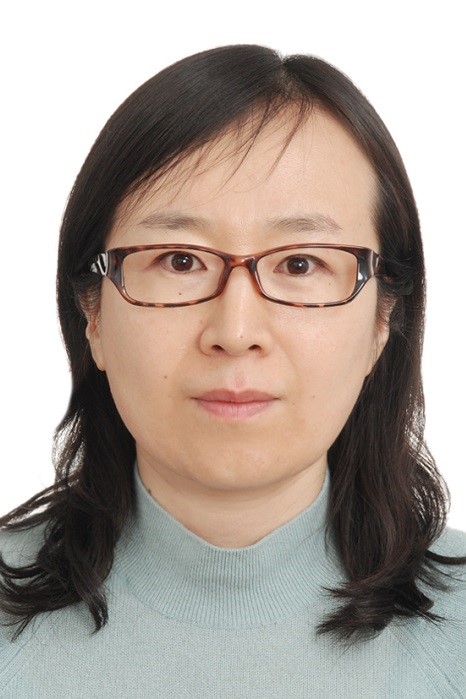
Dr. Jingru Liu is Professor of Urban and Industrial Ecology at the State Key Laboratory of Urban and Regional Ecology. She got a Ph.D. degree from Chinese Academy of Sciences. Her research focus on urban metabolism and material flow analysis, sustainable production and consumption, industrial symbiosis, life cycle assessment and carbon footprint.
Urban and Industrial Ecology
Xiuzhi Hua, Jingru Liu*, Guanming Sun. Urban industrial solid waste metabolism based on ecological network analysis: A case study of Tianjin. Cleaner and Responsible Consumption. 2023. Jingru Liu*, Haotong Wu, Xin Tian, Heming Wang, Yinglei Wu. Materials footprint of household consumption in China. Journal of Industrial Ecology, 2022, 26: 1504– 1513. Lei Shi, Jingru Liu*, Yutao Wang, Anthony Chiu, Cleaner production progress in developing and transition countries, Journal of Cleaner Production, Volume 278, 2021, 123763, https://doi.org/10.1016/j.jclepro.2020.123763. Jingru Liu*, Mingxia Wang, Chao Zhang, Ming Yang, Yingmei Li,Material flows and in-use stocks of durable goods in Chinese urban household sector, Resources, Conservation and Recycling, Volume 158, 2020,104758, https://doi.org/10.1016/j.resconrec.2020.104758. 陈四瑜,刘晶茹,孙光明.基于脱钩指数的工业园区碳排放与经济发展关系.环境科学:2023. DOI:10.13227/j.hjkx.202211003. 武昊彤,冼超凡,刘晶茹.城市代谢效率研究的热点识别与综合效率实证研究.生态学报,2021,41(22):8709-8717. 刘晏冰,韩宝龙,刘晶茹,欧阳志云.我国城市人与自然耦合系统的协调度[J].生态学报,2021,41(14):5578-5585. 秦青,刘晶茹,于强,马奔,谭宏利,解林红,温亚利.四川省大熊猫保护地生态安全及其时空演变.生态学报,2020, 40(20): 7255-7266. 李莹美,陆轶峰,刘晶茹,洗超凡,钱雨果.深圳市城市化过程物质存量变化及驱动力研究.环境科学与管理,2020,45(09):165-169. 冼超凡,刘晶茹,潘雪莲,欧阳志云.典型移民城市食物氮足迹估算分析—以深圳市为例.生态学报,2020,40(20):7441-7450. 郑颖,逯非,刘晶茹,王效科.我国典型城市化石能源消费CO2排放及其影响因素比较研究.生态学报,2020,40(10):3315-3327. 孔子科, 刘晶茹, 孙锌. 中国城镇家庭乘用车物质代谢分析. 资源科学, 2019, 41(4): 681-688. 杨东,刘晶茹,李玉,贾永飞,石峰.面向城市管理的城市建筑存量研究综. 中国环境管理, 2019,11(5):88-93.
Research on regional symbiosis system evaluation and ecological management from life cycle perspective; Research on the metabolic mechanism of multi-source solid waste in typical large cities around the Bohai Region Food-energy-water metabolism in Ulaanbaatar in the process of urbanization; Landscape spatial material flow process and optimization in rapidly urbanized areas; Development of carbon footprint accounting methods and toolkits for key industries that deal with carbon tariffs; Carbon peak and carbon neutrality implementation path in Zhengzhou Economic and Technological Development Zone; Ecological Industrial Planning of Chengdu Economic and Technological Development Zone;





 中文
中文