中文
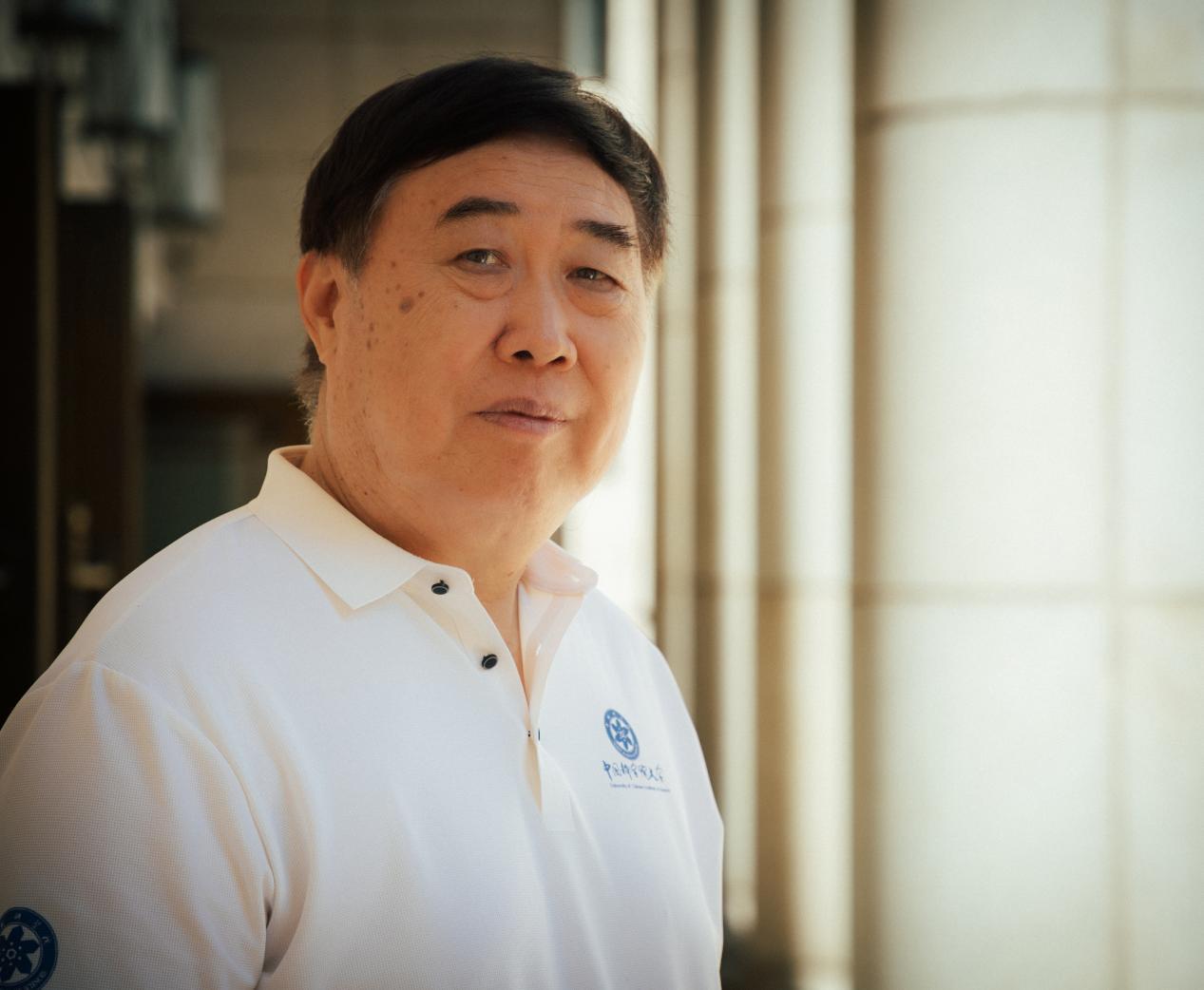
中文On September 23, 2026, the Volvo Environment Prize Foundation announced that the 2026 Volvo Environment Prize has been awarded to Professor Bojie Fu, Academician of the Chinese Academy of Sciences (CAS) and Professor at the Research Center for Eco-Environmental Sciences, CAS, in recognition of his pioneering contributions to social-ecological systems and sustainability science, and his exceptional ability to connect local restoration with global sustainable development.
Since the first award in 1990, the Volvo Environment Prize has become one of the scientific world’s most prestigious environmental prizes. Often described as the “Nobel Prize” of the environmental sciences and sustainable development, the prize is awarded annually to people who have made outstanding scientific achievements that contribute significantly to environmental stewardship and sustainability.
Professor Fu is an outstanding scholar whose work has profoundly advanced the scientific foundations for sustainable development, from local ecological restoration to global sustainability. Over several decades, he has become a global pioneer in landscape-scale social-ecological restoration, with a particular focus on how scientific knowledge can support practical solutions to environmental degradation, poverty eradication, and sustainable development.
Drawing on long-term field observations, remote sensing monitoring, and model development, Professor Fu developed a comprehensive analytical paradigm of “pattern-process-service-sustainability” to understand the social-ecological effects of land-use changes and support ecological restoration practices. Using this framework, the effects of land-use changes on soil moisture, nutrients, and erosion were studied at multiple spatial scales, from plots and transects to catchments and regions, and the mechanisms underlying interactions between land-use structure and ecological processes in the Loess Plateau were systematically illustrated. The analysis of the trade-offs between carbon sequestration and water yield revealed that revegetation in the Loess Plateau is approaching sustainable water resource limits. He also developed a spatially explicit assessment and optimization tool for regional ecosystem services and proposed land-use configurations for multi-objective optimization. These studies have provided critical scientific foundations for ecological conservation and restoration policies on the Loess Plateau and for the implementation of China’s large-scale Grain for Green programme.
Professor Fu has extended his research on land degradation, ecosystem services and sustainable development from the Loess Plateau to drylands worldwide. He initiated and led the Global Dryland Ecosystem Programme (Global-DEP), which has been included in the Third Set of Endorsed Programmes under the International Decade of Sciences for Sustainable Development led by UNESCO. He has also developed frameworks for analyzing the complex interactions among the Sustainable Development Goals (SDGs) and proposed a systems approach termed “classification–coordination–collaboration” for advancing the SDGs. His research has revealed patterns of synergies and trade-offs among different SDGs and how these relationships vary across space and time. Through these efforts, he has helped advance ecosystem restoration and sustainable management in China and other developing regions, with broad academic and societal impacts.
The Volvo Environment Prize Jury recognized Professor Fu’s pioneering contributions to social-ecological systems and sustainability science, as well as his exceptional ability to connect local realities with global agendas, completing the science-to-policy-to-practice chain. The Jury particularly highlighted that his long-term research on the Loess Plateau and other dryland regions has generated internationally influential insights into soil erosion control, vegetation and biodiversity restoration, land management, and ecosystem-service interactions. These studies have demonstrated how large-scale degraded landscapes can be restored while improving human well-being, providing valuable lessons not only for China but also for many developing regions facing similar challenges of land degradation, water scarcity, food insecurity, and rural vulnerability.
The 2026 Volvo Environment Prize award ceremony and academic seminar will take place in Stockholm, Sweden, in early November.